
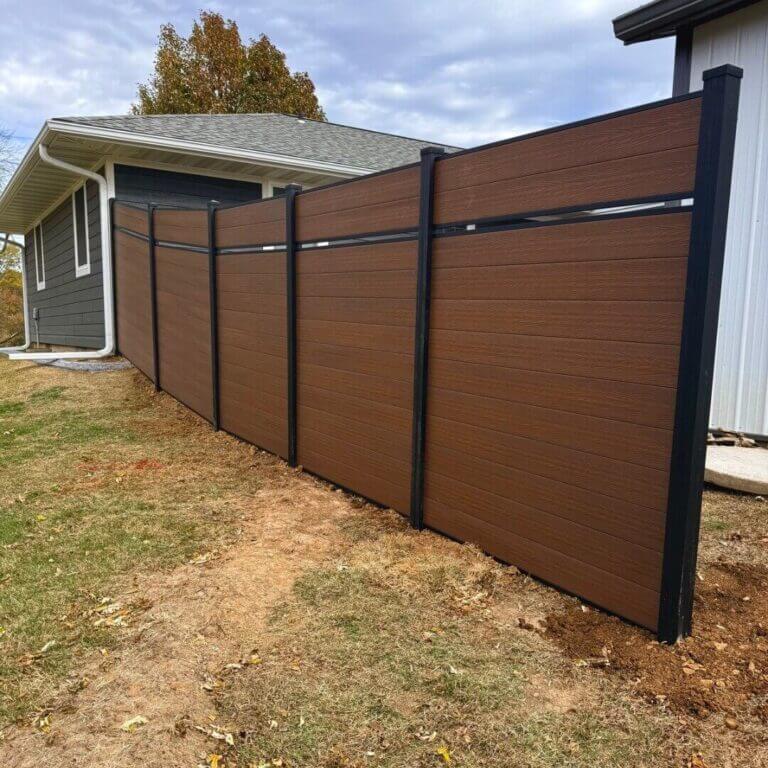
Choosing the best fence for Missouri weather is less about picking a “favorite” material and more about matching that material to what the sky, soil, and seasons actually throw at it. Between humid summers, drenching spring rain, hard winter freeze-thaw cycles, straight-line winds, and relentless sun, a fence here lives a tougher life than the brochure photos suggest. The right choice comes down to your budget, how much privacy you want, how much upkeep you’re willing to do, and how well a given material handles moisture, temperature swings, and storms over a decade or more.
This guide compares the five fence materials Missouri homeowners ask about most — wood, vinyl, chain link, aluminum, and composite — and grades each one on how it performs in our climate, not just how it looks on day one. By the end you’ll know which Missouri fence materials fit your property, your maintenance tolerance, and your long-term budget.
Why Missouri Weather Is Hard on Fences
Missouri sits in a transition zone that gets a little of everything: humid Southern summers, Midwestern thunderstorms, and genuine freeze-thaw winters. That mix is exactly what wears fences down. Before you compare materials, it helps to understand the specific forces a fence has to survive here.
Humidity & moisture
Long humid stretches keep fences damp well after the rain stops. Persistent moisture feeds rot, mildew, and algae on porous materials and is the number-one enemy of untreated wood.
Heavy rain & drainage
Spring storms saturate the soil around your posts. Where drainage is poor, posts sit in wet ground for days, which accelerates rot in wood and raises the risk of frost heave later.
Freeze-thaw cycles
Missouri temperatures cross the freezing mark over and over each winter. Water trapped in soil and in porous boards expands as it freezes, lifting posts and cracking or splitting materials over time.
Heat & UV
Summer sun fades color, dries and checks wood, and can make lower-grade vinyl brittle or prone to expansion. UV exposure is steady all season, even on mild days.
Wind & storms
Strong straight-line winds and severe thunderstorms are routine. A solid privacy fence acts like a sail, so post strength and footing matter — and falling limbs are a real cleanup risk.
Soil movement
Much of Missouri has clay-heavy soil that swells when wet and shrinks when dry. Combined with freeze heave, that movement stresses posts and can rack panels out of square.
There’s one more factor that doesn’t show up in a spec sheet: the maintenance reality. A fence that looks great on day one but needs annual staining or frequent board swaps will cost you weekends and money over its life. In this climate, a low maintenance fence Missouri homeowners can mostly leave alone isn’t a luxury — it’s what keeps a fence looking good through years of humidity and freeze-thaw.
Best Fence for Missouri Weather: Quick Comparison
Here’s a side-by-side look at how the five common fence materials for Missouri weather stack up. The deeper sections below explain each one in detail.
| Fence material | Weather strengths | Weather weaknesses | Best for |
|---|---|---|---|
| Wood | Low upfront cost, classic look, easy board-by-board repair | Rots, warps, cups, and splits in humidity and freeze-thaw; grays in UV; attracts insects; needs regular staining/sealing | Budget-minded buyers who want a traditional look and accept the upkeep |
| Vinyl | Won’t rot, no staining, rinses clean | Lower-grade product can crack or grow brittle in hard cold and flex or sag in heat; limited premium looks | Low-maintenance buyers who like a clean white or neutral panel |
| Chain link | Inexpensive, very durable, open mesh shrugs off wind | No real privacy; utilitarian appearance; coatings and bottom rails can corrode where water pools | Pet runs, utility areas, and budget perimeter containment |
| Aluminum | Won’t rust, low maintenance, dimensionally stable, handles wind | Open/decorative style offers no privacy on its own | Pool and decorative fencing — and as posts/rails in composite systems |
| Composite | Resists moisture and rot, holds color, stable through temperature swings, no staining/sealing | Higher upfront cost; maintenance-friendly but not maintenance-free | Premium, low-maintenance privacy built for Missouri’s climate |
Wood Fencing in Missouri Weather
Wood is the default many Missourians grew up with — cedar or treated-pine privacy panels. It’s affordable, warm-looking, and easy to find. But wood fence Missouri weather performance is where the romance tends to fade, because wood is porous and our climate is wet.
Where it holds up:
- Lowest upfront cost of the privacy options
- Natural, traditional appearance that suits older and rural homes
- Easy to repair one board at a time
- Widely available from local suppliers
Where Missouri weather is hard on it:
- Absorbs moisture in humid, rainy stretches, which leads to rot, mildew, and algae
- Cups, warps, and shrinks as it repeatedly wets and dries, opening gaps between boards
- Splits and cracks under freeze-thaw as trapped water expands
- Grays and dries on the surface from UV exposure
- Vulnerable to termites and carpenter bees
- Needs cleaning plus staining or sealing every one to three years to stay protected
Bottom line: Wood still makes sense if you want the lowest upfront price and a traditional look, and you’re genuinely willing to stain, seal, and replace boards over time. In Missouri humidity and freeze-thaw, plan on that upkeep — wood is not a “set it and forget it” fence here.
Vinyl Fencing in Missouri Weather
Vinyl (PVC) solved wood’s biggest headache: it won’t rot and never needs staining. For a lot of buyers that makes vinyl fence Missouri weather performance a clear step up. Quality varies widely, though, and that variation shows up most in our temperature extremes.
Where it holds up:
- Won’t rot or absorb water, and never needs stain or sealant
- Rinses clean of pollen, dust, and mildew with a hose
- Solid-panel styles deliver good privacy
Where Missouri weather tests it:
- In hard winter cold, thin or low-grade vinyl can become brittle and crack on impact — a stray limb or a rock from the mower
- Summer heat can cause expansion, flex, or sagging in long runs and gates
- Hollow profiles can rack in high wind if posts aren’t set well
- Color and finish choices are limited, and some homeowners feel the look reads less premium than wood or composite
Bottom line: Vinyl is a reasonable low-maintenance pick, especially in white or neutral tones, if you choose a heavier-gauge product and the posts are set properly. Just know that not every vinyl fence delivers a premium appearance, and cheaper panels can struggle with Missouri’s swing from summer heat to winter cold.
Chain Link Fencing in Missouri Weather
Chain link is the workhorse — galvanized or vinyl-coated steel mesh. It isn’t about looks; it’s about function and budget, and on those terms it performs well in any Midwest climate.
Where it holds up:
- Inexpensive to install over long perimeters
- Extremely durable for containment
- Open mesh lets wind pass through, so it rarely acts like a sail in storms
- Handles decades of weather with minimal structural failure
Where it falls short:
- Essentially zero privacy on its own
- Utilitarian appearance that most HOAs and front yards won’t accept
- Coatings and bottom rails can corrode or wear where water pools
- Privacy slats or screens add some coverage, but their look and lifespan are limited, especially under UV
Bottom line: Chain link is the practical answer for pet runs, utility areas, and budget containment. For a privacy or premium backyard fence in Missouri, it’s simply not the right tool.
Aluminum Fencing in Missouri Weather
Decorative aluminum is the powder-coated “wrought-iron look” you see around pools and front yards. It’s worth understanding for two reasons: it’s a strong decorative option, and aluminum also plays a quiet structural role inside composite fence systems.
Where it holds up:
- Doesn’t rust like steel — aluminum can oxidize on the surface but won’t rust through
- Powder-coat finish resists fading and needs little more than an occasional rinse
- Open pickets shrug off wind
- Stays dimensionally stable through Missouri’s temperature swings
As a standalone fence, aluminum’s limitation is obvious: it’s a decorative, open-picket style, so it won’t block sightlines or wind. If you’re fencing a pool, your fence also has to satisfy local safety codes, many of which Missouri jurisdictions base on standards from the International Code Council — worth checking before you choose a style.
Where aluminum really earns its place in a durable fence for Midwest weather is as the structure of a composite system. Wood posts set in Missouri’s wet clay are a classic failure point: they rot at the soil line and loosen with freeze heave. Aluminum posts and rails don’t rot, resist rust, and stay straight through temperature swings, giving the fence a strong, stable skeleton that outlasts the wood frame it replaces.
Bottom line: Choose decorative aluminum for pool enclosures and curb appeal. Value aluminum posts and rails when you want a composite privacy fence that stays straight and rot-free for the long haul.
Composite Fencing in Missouri Weather
Composite fencing is the newer premium category — boards made from a blend of recycled wood fibers and polymer, sometimes called WPC. It’s engineered specifically to solve wood’s moisture and maintenance problems, which is why interest in composite fence Missouri options keeps growing.
Where it holds up in Missouri:
- Resists moisture absorption far better than wood, so it doesn’t rot
- Resists the mildew and algae that feed on bare, damp wood, making it a fence that holds up in humidity
- Requires no staining or sealing — color runs through or is capped onto the board rather than painted on a surface that peels
- Holds its color against UV better than untreated wood
- Stays stable through freeze-thaw because it doesn’t soak up water the way wood does
- Paired with aluminum posts and rails, the whole system stays straight and rot-free
One honest caveat: composite is maintenance-friendly, not maintenance-free. It still benefits from an occasional rinse to clear pollen, dust, and any surface mildew, and like every fence it should be installed with proper drainage and footings. Quality also varies by manufacturer, so testing matters — composite boards are commonly evaluated using ASTM International methods for weathering and performance. On upfront cost, composite runs higher than wood or basic chain link and is comparable to or above vinyl depending on the product, but the trade is far less upkeep across the fence’s life. You can see how a full horizontal system goes together on the composite fencing page.
Bottom line: For a premium, low-maintenance privacy fence built for Missouri’s humidity, rain, and freeze-thaw, composite boards on aluminum posts are one of the strongest options available today.
What Fence Material Is Best for Privacy in Missouri?
Privacy comes down to two things: solid coverage, and how well that solid panel survives wind and weather without opening gaps. Here’s how each material handles the job when you’re after the best privacy fence for Missouri.
Wood privacy fence
Excellent privacy on day one and a look many people love. The catch is that wood boards cup and shrink as they dry, so gaps tend to open over the years — and keeping it looking solid means ongoing staining and board replacement.
Vinyl privacy fence
Solid vinyl panels give good privacy with very little upkeep. Choose a heavier-gauge product so cold-weather brittleness and heat flex are less of a concern, and accept that color and texture choices are limited.
Composite privacy fence
Full privacy with boards that stay straight and resist the shrink-gaps wood develops, plus a premium modern look and low upkeep. For homeowners who want privacy that still looks good a decade in, composite is a standout choice.
Chain link with slats or screens
Adds partial privacy cheaply, but it reads utilitarian and the slats degrade under UV over time. It’s a stopgap, not a premium privacy solution.
Aluminum (not a privacy option)
Decorative aluminum is open by design, so it provides no privacy on its own. It’s the wrong pick if blocking sightlines is your goal — though its posts and rails are valuable inside a composite privacy system.
What Fence Material Requires the Least Maintenance?
If your top priority is spending as few weekends as possible on fence upkeep, here’s the rough ranking from least to most maintenance in Missouri’s climate.
- Chain link — essentially rinse-and-forget; coatings may wear over decades, but routine upkeep is minimal.
- Aluminum — an occasional rinse is about it; the powder coat is durable and it won’t rust.
- Vinyl — wash occasionally with no staining required; product quality affects long-term cracking risk.
- Composite — periodic rinse to clear pollen and mildew, with no staining or sealing; maintenance-friendly, not maintenance-free.
- Wood — the most work by far: clean, re-stain or seal every one to three years, replace boards, and treat for insects.
One important clarification: this is a ranking of workload, not of overall value. Chain link wins on maintenance but loses badly on privacy and looks. The right material balances upkeep against privacy, appearance, and how long it stays looking good — which is why composite often wins for homeowners who want a low maintenance fence Missouri weather won’t quickly age.
How to Choose the Right Fence for Your Missouri Property
There’s no universally “best” fence — only the best fit for your priorities. Walk through these factors before you decide:
- Budget — weigh upfront price against lifetime cost, including upkeep and eventual replacement.
- Privacy — do you need a full sightline block, or just a boundary?
- Maintenance tolerance — be honest about whether you’ll actually stain and seal a wood fence on schedule.
- HOA rules — many neighborhoods restrict materials, colors, and heights, so check before you fall in love with a style.
- Pool requirements — pool enclosures must meet local safety codes, which can dictate height, spacing, and self-latching gates.
- Pets and kids — consider gaps at the bottom, gate hardware, and how secure the containment needs to be.
- Desired appearance — traditional vertical wood, clean vinyl, or a modern horizontal composite look.
- Long-term value — a fence that needs little upkeep and lasts decades can cost less over time even at a higher upfront price.
- Whether you want a premium look — if curb appeal and resale matter, that narrows the field quickly.
Where StackFence Fits
StackFence is a Missouri-based supplier of horizontal composite fence systems for homeowners who want a premium, low-maintenance privacy option built for our climate. The system pairs composite boards with black aluminum posts and rails — the composite handles moisture and weather, while the aluminum frame stays straight and rot-free where wood posts would eventually fail.
Boards are available in Brown, Storm Grey, and Black, and you can review the full composite fencing system to see how it’s put together. If you’re weighing colors, it’s worth feeling the material in person before you commit — you can request samples to compare them in real sunlight. StackFence also helps with material pricing, layout planning, gate planning, and material takeoffs so you can plan a project accurately; when you’re ready, you can request a quote for material pricing on your specific layout.
Frequently Asked Questions
What is the best fence for Missouri weather?
There’s no single winner — it depends on budget, privacy needs, and how much maintenance you’ll tolerate. For low-maintenance privacy that handles humidity and freeze-thaw, composite on aluminum posts is one of the strongest choices. For the lowest upfront cost, wood; for utility and pets, chain link; for pools and decorative borders, aluminum.
Is wood fencing bad for Missouri weather?
Not “bad,” but high-maintenance. Humidity, rain, and freeze-thaw cause rot, warping, splitting, and graying unless you stain or seal it regularly and replace boards over time. It’s a fine choice if you accept that upkeep.
Does vinyl fencing hold up in Missouri winters?
Quality matters a lot. Heavier-gauge vinyl generally holds up well, while thin or low-grade vinyl can become brittle and crack in hard cold, especially on impact. Proper post setting also helps it resist winter wind.
Is composite fencing good for humid climates?
Yes. Composite resists moisture absorption far better than wood, so it doesn’t rot and resists mildew and algae better, which makes it well suited to Missouri’s humid summers. An occasional rinse keeps it clean.
What fence material requires the least maintenance?
Chain link and aluminum need the least, followed by vinyl, then composite (maintenance-friendly, not maintenance-free), with wood needing the most. Keep in mind the lowest-maintenance material isn’t always the best fit for privacy or appearance.
What fence is best for privacy in Missouri?
Solid-panel fences — wood, vinyl, and composite. Composite delivers full privacy without the shrink-gaps and constant upkeep wood develops, which makes it a strong choice when you want privacy that still looks good years later.
Do composite fences need staining or sealing?
No. Composite does not require staining or sealing the way wood does. An occasional rinse to clear pollen and mildew is enough to keep it looking good.
Should I request samples before choosing a fence color?
Yes. Colors look different in real sunlight and against your home than they do on a screen. Comparing samples of Brown, Storm Grey, and Black in person is the easiest way to feel confident before you commit.
The Bottom Line for Missouri Homeowners
The practical answer to the best fence for Missouri weather depends on what you value most. Wood is traditional and affordable but the highest-maintenance option in our humidity and freeze-thaw. Vinyl is genuinely low maintenance but quality-dependent and not always the premium look people want. Chain link is durable and budget-friendly but offers no privacy and little curb appeal. Aluminum is excellent for decorative and pool fencing — and valuable as the structural posts and rails inside a composite system.
Composite stands out as a premium, low-maintenance privacy choice engineered for exactly the conditions a Missouri fence faces: humidity, heavy rain, freeze-thaw, wind, and sun. Match the material to your budget, privacy needs, and maintenance tolerance, factor in our climate honestly, and you’ll end up with a fence that still looks good long after the first few seasons.

